[PR] 本記事には広告・プロモーションが含まれます。
We’ve been to Miyakojima, Okinawa, 11 times as a family. When our son was 0–2, playing on the sand was enough, and we never thought about the tide.
Once he could swim and started snorkeling, we noticed something. The same beach looks completely different depending on when you go.
At low tide, we nearly cut our feet on the rocks at Imgya Marine Garden and left early. At low tide, Aragusuku Beach was too shallow to snorkel, and we found no sea turtles. At high tide, the sparkling shallows at Sunayama Beach were gone, and it looked like any other beach.
After 11 trips, this is the answer we reached:
Snorkeling beaches at high tide. Sand-and-shallows beaches at low tide.
This article explains how we use that rule, which beaches we go to, when to visit, and what overseas families should know before they go.

Quick answers
| Question | Our answer |
|---|---|
| Best time to go with kids? | Early July, or September for the best balance of sea, prices and crowds |
| How many days? | 4 days, 3 nights |
| Do I need a car? | Yes. The beaches are spread around the island |
| Best beach for kids? | It depends on the tide. That’s the whole point |
| Will we see sea turtles? | We have at Aragusuku Beach, but sea life is never guaranteed |
Why the tide matters so much on Miyakojima
Miyakojima’s beaches are wide and shallow, with coral and rock close to shore. That’s what makes them so good for kids, and it’s also why the tide changes everything. It’s about 6 hours from high tide to low tide, and tides rise and fall every day, whatever the season.
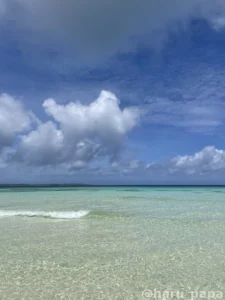
Snorkeling beaches need water. At high tide, the rocks underfoot are covered and fish and turtles come closer to shore. Sand-and-shallows beaches are the opposite. At low tide, the water pulls back and leaves shallow, sparkling pools where small kids can play and you can take beautiful photos.
How we use it: every morning, we search “Miyakojima tide” on Google, look at that day’s high and low tide times, and only then decide where to go.
The beaches we keep going back to
Aragusuku Beach
This is our sea turtle beach. We’ve seen turtles here on 10 visits in a row. We’ve also seen a sole over 50 cm long, titan triggerfish and clownfish. Go at high tide, and go early in the morning when it’s quieter. We rent a tent here and use it as our base for the day.
Imgya Marine Garden
A sheltered cove with a walking path around it. At high tide it’s an easy place to snorkel and watch fish. At low tide, honestly, we have no good memories of it.
Sunayama Beach
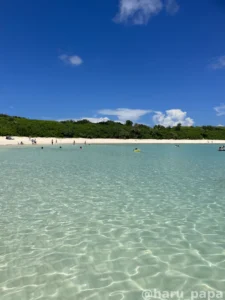
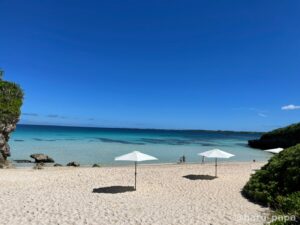
Walk down a sandy path through the trees and the beach opens up in front of you. At low tide the shallows sparkle. At high tide it becomes an ordinary beach.

Yonaha Maehama Beach
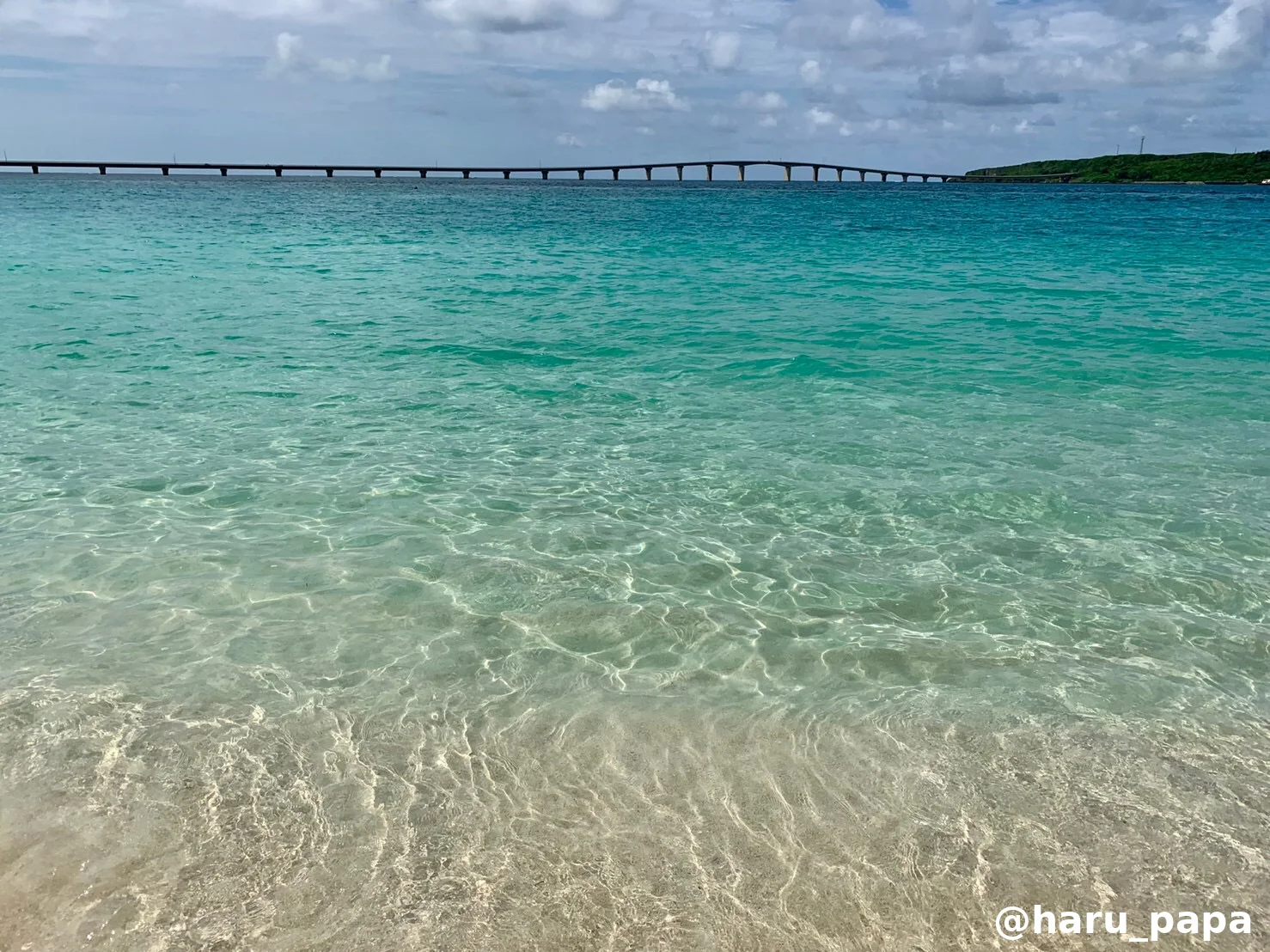
A long, shallow white-sand beach with Kurima Bridge in the distance. It works at either tide, with more room to swim at high tide. It’s where we go straight from the airport on day one, every time.
Toguchi Beach (Irabu Island)
Across Irabu Bridge on Irabu Island. The sand here is the best of all. We don’t snorkel here. Instead we relax on the sand and look for crabs along the breakwater.

When to go
We have visited between May and September. We have never been in winter.
| Month | Our rating | Why |
|---|---|---|
| May | Good | After the beaches open, before the rainy season. Some years the rainy season starts early |
| June | Very good | Aim for just after the rainy season ends. Lower prices, and the sea gets good |
| Early July | Best | After the rainy season, before typhoon season. Stable sunny weather |
| Late July–August | Mixed | The sea is at its best, but prices peak and it’s crowded |
| September | Very good | Our most frequent month. Good balance of sea, prices and crowds. Be ready for typhoons |
| December–February | Not ideal | Too cold to swim, and the north wind is strong |
Our rule for weather: if rain is forecast, we go. If a typhoon is coming, we don’t. Even on trips with rain in the forecast, there was never a day we couldn’t get in the sea. Island rain is often a short squall, and the east and west of the island often have different weather.
Getting there and getting around
There are two airports. Most flights, including direct flights from Tokyo Haneda and flights from Naha, use Miyako Airport in the center of the island. Miyako Shimojishima Airport, on Shimoji Island next to Irabu Island, has Skymark flights from Tokyo Haneda, Kobe and Naha, and seasonal international flights have operated in recent seasons. Our family has always used Miyako Airport.
You need a car. The beaches are spread around the island, and following the tide means moving between them morning and afternoon. Our family uses Times Car sharing, but it only accepts Japanese driver’s licenses. Overseas visitors should book a rental car, and will need an International Driving Permit (1949 Geneva Convention), or for some countries an official Japanese translation of their license.
How a beach day flows with kids
Here’s the rhythm that works for our family on Miyakojima.
- Morning: check the tide, then head to the beach that fits it. Early mornings are quieter, especially at Aragusuku Beach
- Between beaches: kids recharge by napping in the car, then play hard at the next beach. That rhythm is the key to getting around with kids
- Lunch: Miyako soba at a local diner on the way to the next beach
- Afternoon: switch to a beach that suits the afternoon tide, or cross Irabu Bridge to Irabu Island
- Evening: rinse off, then dinner at your place on most nights
On day one, we always drive straight from the airport to the beach. Even when we’re tired from the flight, one look at Miyakojima’s sea changes everyone’s mood. Then we stop at a supermarket for dinner, breakfast, drinks and ice before checking in.
Rainy day plan
- The weekly forecast says rain: go anyway. Island rain is often a short squall
- It’s raining that morning: check a rain radar app and head to a beach where there are no clouds. The east and west of the island often have different weather
- It’s raining all over the island: go for a slow meal at a local diner. It often clears up while you eat
- You can’t read the weather: don’t book dinner. Eat at your place with food from the fish market and the supermarket
- A sunny day: stay at the beach until evening. Make full use of the sunny days
- A typhoon: don’t go. Change your dates
What to pack: cover, rinse, cool
On our first trip, we made one mistake after another. The tops of our son’s feet got badly sunburned. We only had 2 swimsuits each and ran out of dry ones. We got sand all over the car. And after 2 hours parked in the sun, the child seat was too hot to sit in. Every one of these can be prevented by packing.
- Cover: long-sleeve rash guards, swim leggings or foot covers, a sea hat with a chin strap, and water shoes for coral pieces
- Rinse: a 10–20 L water tank with a tap, to wash sand off feet before getting in the car
- Cool: a car sunshade (beach parking has almost no shade), and a wide-mouth water bottle you can fill with ice
- Swimsuits: you’ll visit 2–3 beaches a day, so bring more than you think
Where to stay: kitchens over luxury
We don’t stay at big resorts on Miyakojima. We’ve stayed about 8 times at an apartment-style hotel inside Shigira Resort, and more recently at newer places with washing machines, dryers and kitchens. A kitchen means you can buy a sashimi platter from a local fish market on the way back from the beach and eat it at your place. We eat out twice and eat in twice on a 4-day trip. Eating out every night tires the whole family.

Tips for overseas visitors
| Topic | What to know |
|---|---|
| Driving | Japan drives on the left. Children under 6 must ride in a child seat; reserve one with your rental car |
| Cash | Carry Japanese yen. Many small diners, beach parking donation boxes and shops toward Irabu Island take cash only, and ATMs are few |
| Tide times | Search “Miyakojima tide” on Google each morning |
| Restaurants | Many local restaurants take bookings by phone in Japanese. Popular ones fill up, especially during Japanese holidays |
| Typhoons | If you go in September, check your airline’s cancellation rules and get travel insurance that covers flight cancellations |
FAQ
Is Miyakojima good for young kids?
Yes. Many beaches are wide and shallow. Just pick the right beach for the tide: low tide for shallow play, high tide for snorkeling.
Where can we see sea turtles on Miyakojima?
We’ve seen them at Aragusuku Beach at high tide, early in the morning. Sea life is never guaranteed.
How many days do we need?
We think 4 days, 3 nights. That gives you two full days to follow the tide between beaches, plus Irabu Island.
Can we get around without a car?
Not really, if you want to follow the tide between beaches.
Our full itinerary, in one PDF
If you want the exact plan we follow, we turned it into a 14-page English guide:
- The tide × beach cheat sheet, and two ways to plan a day (morning high tide or morning low tide)
- A day-by-day plan with times
- Three places to stay, compared honestly
- Where we eat and what to order, including the local fish market
- Plan B for rainy days, a full packing list, a budget for 2 adults + 1 child, and a booking timeline
- Japanese names for every key place
Get the Miyakojima guide on Etsy (US$19)
I’m harupapa, a dad from Japan. Our family has taken 59 trips around Japan with our son, and 59trips.com is where I write about them in Japanese. More English guides: Shiretoko in Winter / Ishigaki Island
Weather, sea conditions and sea life are never guaranteed. Information is as of November 2026; please check official websites before you travel.


コメント