[PR] 本記事には広告・プロモーションが含まれます。
Our first winter trip to Shiretoko, Hokkaido, was in January 2025. We had come for the drift ice. For three days, the sea stayed black. That year, the first drift ice sighting in nearby Abashiri came on February 15, the latest on record.
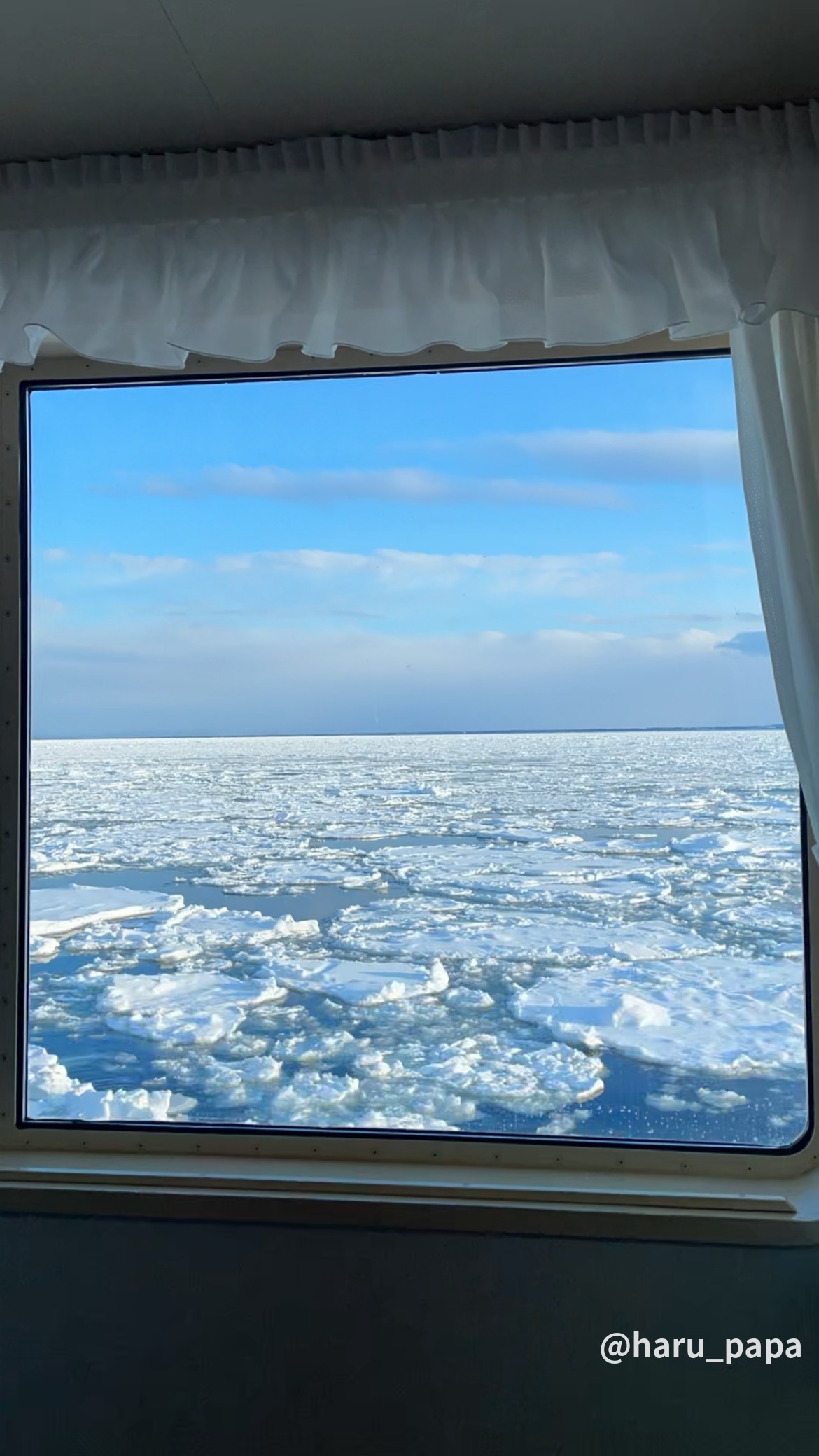
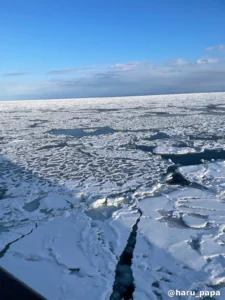
The next February, we stood on the deck of the Aurora icebreaker and the sea was white as far as we could see.
We have now been to Shiretoko five times with our son, in January, February, March, May and June. This article is everything we wish we had known before that first winter trip: when to go, how to get there without driving on snow, what to do if the ice doesn’t come, and what it’s like to travel there with kids.

Quick answers
| Question | Our answer |
|---|---|
| When is the best chance of drift ice? | February |
| Do I need to drive? | No. An airport bus runs to Utoro, and it stops at the icebreaker terminal |
| Is it OK with kids? | Yes. Our son loved the forest walk and the hotel as much as the ice |
| What if there’s no ice? | Shiretoko is still worth it. We’ll explain why below |
| How many days? | 3 days, 2 nights works well |
Why Shiretoko’s drift ice is special
Shiretoko was inscribed as a UNESCO World Natural Heritage Site in July 2005, and drift ice is at the heart of why. Japan’s Ministry of the Environment describes Shiretoko as “the lowest-latitude seasonal sea ice zone in the Northern Hemisphere.” In other words, nowhere else in the Northern Hemisphere does sea ice reach this far south.
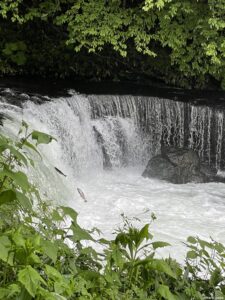
The ice isn’t just a view. It arrives carrying “ice algae,” a kind of phytoplankton. When the ice melts in spring, the algae multiply explosively, and so does the zooplankton that feeds on them. Young salmon feed on that plankton, swim out to sea, and a few years later return to Shiretoko’s rivers, where they feed brown bears and eagles. The gifts of the drift ice reach all the way to life on land.
It’s also shrinking. According to the Japan Meteorological Agency, the maximum sea ice extent in the Sea of Okhotsk has lost about 56,000 km² every 10 years, about 3.5% of the whole sea’s area. By the time our son grows up, this view may not be the same. That’s one reason we keep going back.
When to go: January, February or March
Abashiri’s long-term averages (Japan Meteorological Agency, 1991–2020) put the first drift ice sighting around January 22, with ice reaching the shore around February 4. But it changes a lot from year to year, and it is never guaranteed.
| When | Drift ice | What happened to us |
|---|---|---|
| Late January | Lucky if you see it offshore | January 2025: zero ice. We spent the time at the hotel and playing in the snow |
| February | Best chance | From the Aurora icebreaker, white sea as far as we could see |
| March | Often still there in early March | Eagles on the ice three times, and a wild sea angel at the beach |
If it’s your first winter visit and drift ice is the main goal, go in February. If you’re traveling with grandparents, early March is slightly milder, and in 2026 there was still plenty of ice.

Getting there without driving on snow
Fly from Tokyo Haneda to Memanbetsu Airport (about 1 hour 50 minutes). From there, the Shiretoko Airport Liner bus runs to Utoro, the small town at the base of the Shiretoko Peninsula, in about 2 hours 15 minutes. No reservation is needed.
The detail that changed our trip: the bus stops at the Aurora icebreaker terminal in Abashiri on both the outbound and the return trip. So you can ride the icebreaker on your way home, without renting a car and without traveling between Utoro and Abashiri twice.
In February we did the whole trip by bus. In March, with five of us including the grandparents, we rented a car. A car lets you reach places the bus doesn’t, like the beach where we found sea angels, but the roads are icy and deer often jump out. If you don’t drive on snow at home, take the bus.
The Aurora icebreaker: book early
The Aurora sails from Abashiri from late January to the end of March. A cruise takes about an hour. The cabin is heated, and you can see the ice from inside, but the deck is where you hear the ship breaking through it. Dress for serious cold.
Here’s the lesson we learned the hard way. In February 2026, we tried to book online about a month ahead, and it was full. We called, joined the waitlist, and by luck a seat opened up. If you’re going in February, book the Aurora at the same time as your hotel.

The forest is as good as the ice
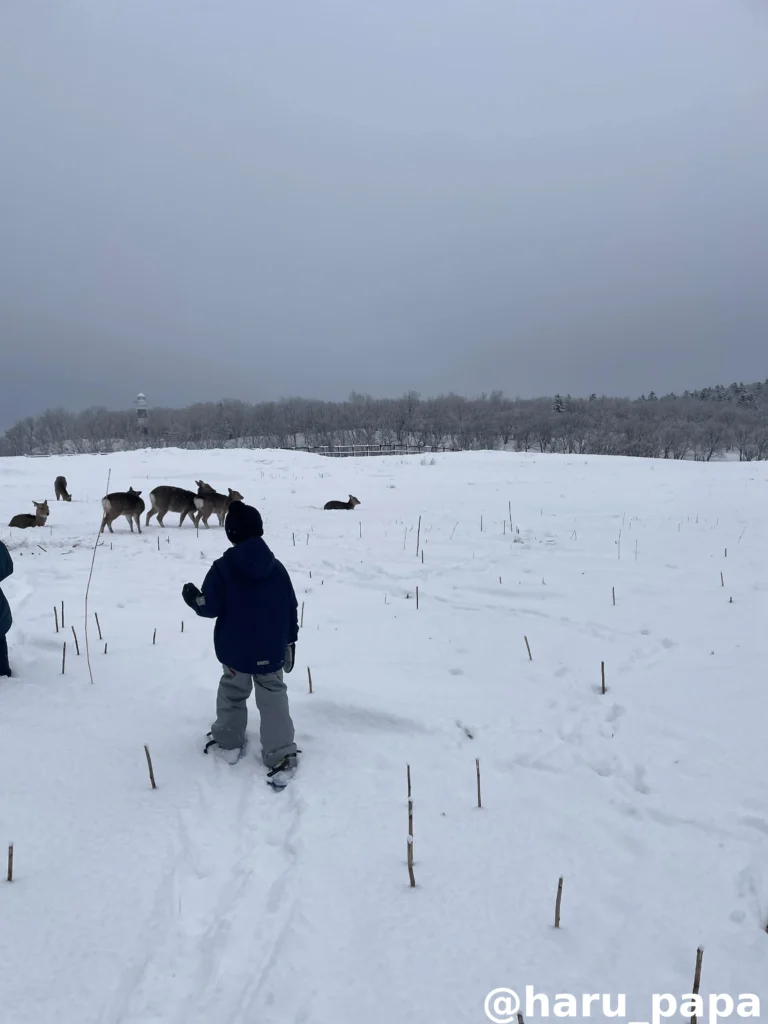
On our second day, we did a guided snowshoe walk to Furepe Falls from the Shiretoko Nature Center. It turned out to be one of the best mornings of the trip, ice or no ice.
- A herd of sika deer stood still just 2–3 meters away, watching us
- Our guide silently pointed to an owl in a tree. Even then, it took us a few seconds to see it
- A wingless insect walking on the snow, the snow crane fly. Our son memorized the name instantly
- Brown bear claw marks running down a tree trunk
- Furepe Falls frozen on the cliff, with the drift ice sea beyond
We only noticed most of these because our guide showed us. If you walk a winter forest with kids, a guided tour is worth it. Age rules vary by operator, so check before you book.
What we met on the frozen sea
In winter Shiretoko, you don’t just see the ice. You see the life it brings.
- Eagles perched on the ice. In March we saw them three times, once from the car
- A wild sea angel (clione) at the water’s edge. Our son decided to look for “the orange dot” in the shallows, and found one
- A comb jelly seen from our kayak
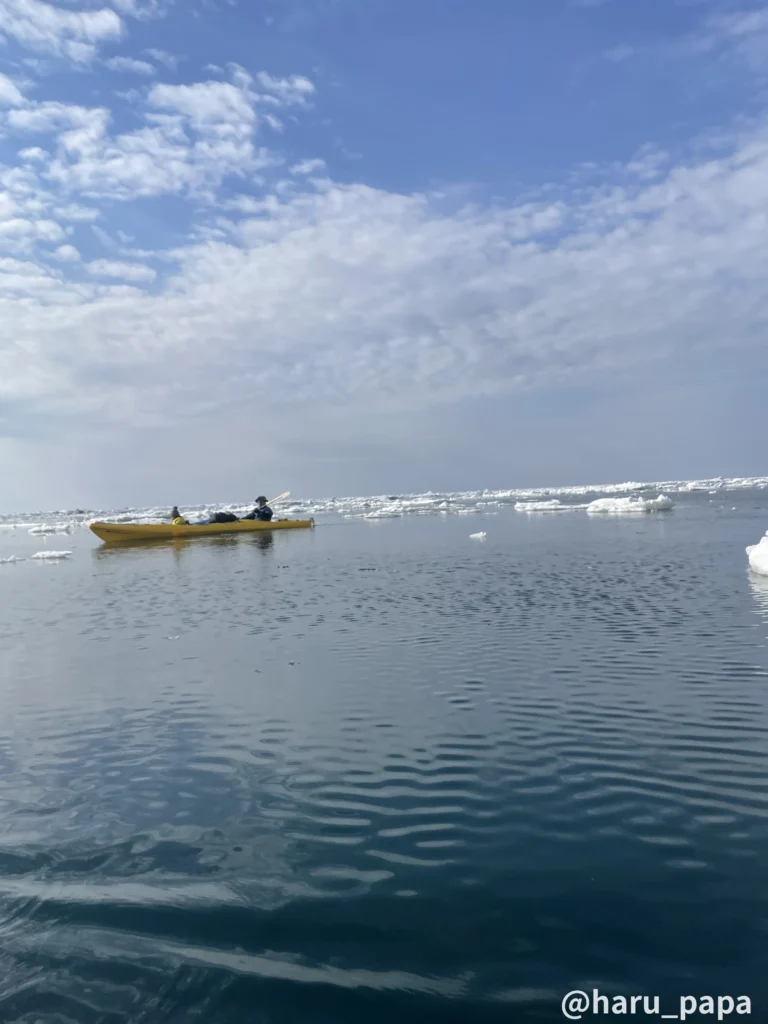
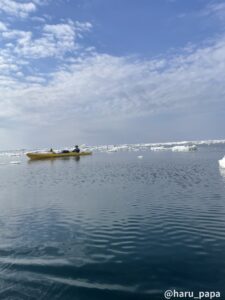
In March we went drift ice kayaking. My wife and I shared one kayak, and our son rode with the guide. We paddled between the floes in calm water. You should absolutely try it, but it only runs when the conditions are right.
If the drift ice doesn’t come
Our January trip with zero ice was not a failure. After five visits, this is the one thing we most want to tell you: even if you miss the drift ice, Shiretoko’s nature will leave you satisfied. That’s a World Heritage site for you.
- No ice: the forest walk is just as good. Deer, owls and winter wildlife are the stars
- Icebreaker cancelled: the winter Sea of Okhotsk is still a different world. Spend the time at the roadside station
- A blizzard: make it a hotel day. Hot springs, sauna, the lounge, the kids’ area
- Kids want to play outside: our son played for hours around the hotel with snow-mold toys (ducks, snowmen) from a 100-yen shop
In January, it was the hotel that saved us. A dish served only once at the buffet. Our son stopping at the goldfish tank near the front desk every single time. Small moments like these became the memories of the trip.
Where to stay in Utoro
We have stayed at KITAKOBUSHI SHIRETOKO five times and KIKI SHIRETOKO three times. Both are in Utoro, right on the Sea of Okhotsk.
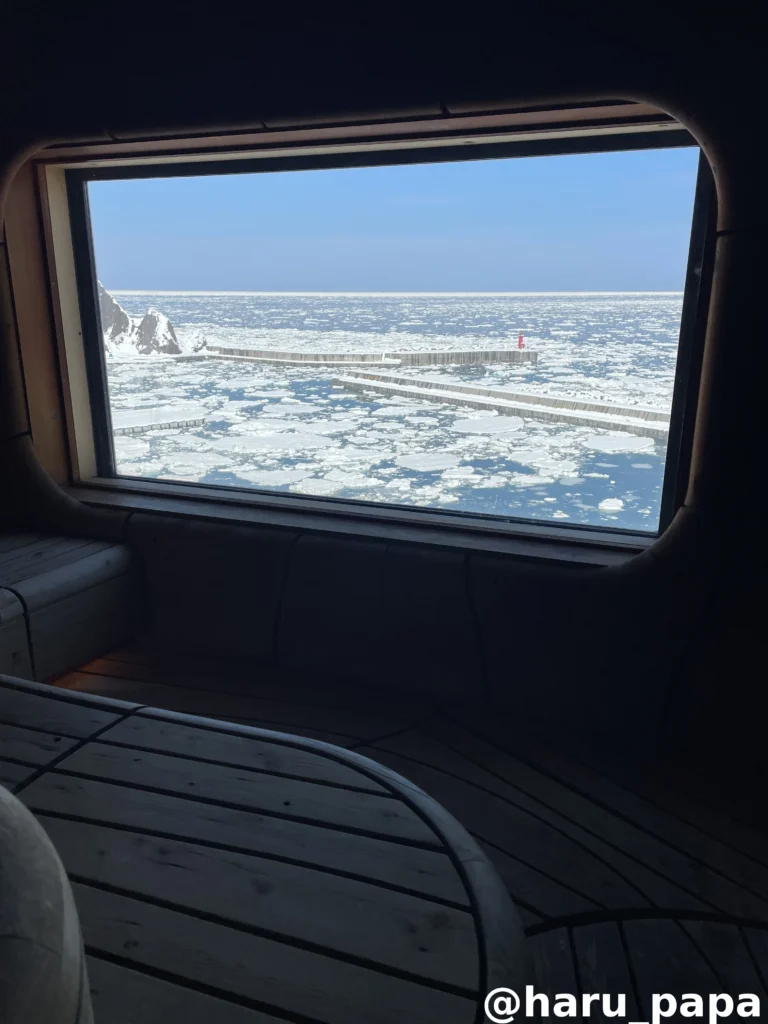
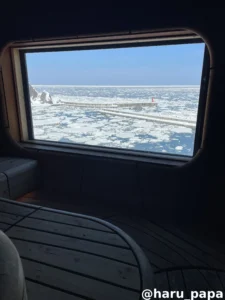
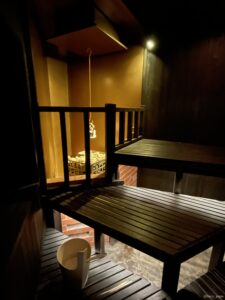
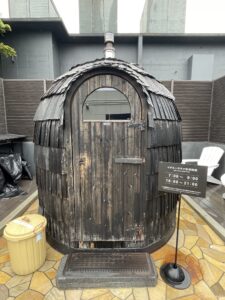
KITAKOBUSHI has saunas whose windows look out over Utoro port. In February the sauna window was white with ice. KIKI has several types of sauna and a kids’ play area, and feels more casual. Our guide compares the two in detail, including which kind of family each one suits.
What to wear
Shiretoko in February is properly cold, especially on the icebreaker’s deck. What worked for us:
- Kids: a thick ski jacket and ski pants, so they can fall in the snow without getting wet. Snow boots, and a hat that covers the ears
- Gloves: waterproof work gloves from a 100-yen shop worn over regular gloves. Snow doesn’t soak through
- Adults: a heavy down jacket, two layers of thermal innerwear, and disposable heat packs (sold at convenience stores) on your back, stomach and soles
- Extras: sunglasses for the glare, and binoculars for eagles and deer
Tips for overseas visitors
| Topic | What to know |
|---|---|
| Cash | Carry Japanese yen, including ¥1,000 notes. The airport bus’s change machine accepts ¥1,000 notes only |
| Driving | You need an International Driving Permit (1949 Geneva Convention), or for some countries an official Japanese translation of your license. Winter roads are icy |
| Hot springs | Wash before getting into the bath. No swimsuits in shared baths. Keep towels out of the water |
| Tattoos | Policies vary by hotel. KITAKOBUSHI asks guests with tattoos not to use the main baths, though small ones fully covered by a cover sticker may be allowed if you ask first. Always check with your hotel before booking |
| English | The Aurora has English signs, pamphlets and an English website. For tours, ask about English guiding when you book |
FAQ
Can I see drift ice in Shiretoko in January?
Sometimes, but it’s a gamble. We saw none in late January 2025. February gives the best chance.
Is the Aurora icebreaker worth it with kids?
Yes. The cabin is heated, so kids can watch from inside, and you can step out on deck when they’re ready. Book early for February.
Do I need a car in Shiretoko in winter?
No. The airport bus covers the airport, the icebreaker terminal and Utoro. A car only helps if you’re comfortable on icy roads and want to explore further.
What if the drift ice doesn’t come?
Plan a guided forest walk and enjoy the hotel. Our zero-ice trip still made us want to come back.
Our full itinerary, in one PDF
Everything in this article comes from our five trips. If you want the exact plan we followed, we turned it into a 17-page English guide:
- The 3-day timetable with winter 2027 bus times, including a version for early flights home
- A detailed comparison of KITAKOBUSHI and KIKI
- Activity prices, booking methods and conditions for the icebreaker, snowshoe tour and kayaking
- A full packing list, a budget for 2 adults + 1 child, and a booking timeline
- Plan B in detail, and Japanese names for every key place
Get the Shiretoko guide on Etsy (US$19)
I’m harupapa, a dad from Japan. Our family has taken 59 trips around Japan with our son, and 59trips.com is where I write about them in Japanese. More English guides: Miyakojima / Ishigaki Island/p>
Drift ice is never guaranteed. Information is as of November 2026; please check official websites for the latest prices, timetables and sailing status before you travel.


コメント